





From Grid Strain to Smart Gains. Distributed EV Charging To Support Canada’s Energy Transition
Canada has big plans for EVs. This energy transition is not about if electric mobility will scale, but rather how to keep it sustainable through the process. By 2035, every new vehicle sold in the country will be zero-emission. That’s astounding progress.
But that means a mammoth demand hitting Canadian grids. It sounds fabulous in theory, but might be chaotic in practice, if not managed well.
The challenge isn’t just adding megawatts and mega charging stations. It’s managing when and where they’re used. This situation is perfect for a distributed charging network like RoadtoEV. It’s powered by data and community participation, and can turn grid strain into a strategic advantage.
New Reality of Load: Loading….
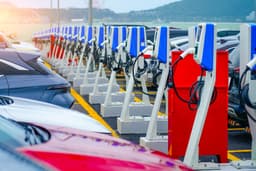
Canada’s charging landscape is accelerating almost as fast as EV’s. Public charging points grew by over 24% year-over-year through March 2025. Most curiously, despite the progress, most charging still happens at home. Typically, evenings, when the grid is already sweating from residential demand.
That’s a recipe for strain. Millions of EVs plugging in around the same time, drawing power from local transformers not designed for synchronized surges. And as provinces push to electrify heating and transit fleets, the pressure builds.
Utility companies can upgrade infrastructure, but this alone can’t solve a behavioural problem. What Canadians need are smarter, distributed and more human-centric ways to shape demand.
The Promise of Distributed Charging
You can think of distributed charging as the crowdsourced version of energy load management. A decentralized network of accessible, privately hosted chargers that smooth demand across time and place. Instead of routing drivers to the same public stations during peak hours, the distributed system creates micro-nodes of charging access in spread communities.
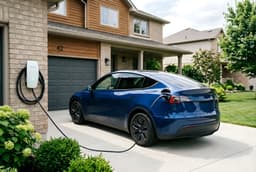
Sounds good in theory? Well, it’s already happening through RoadtoEV, which lets homeowners list their L2 chargers for other EV drivers to book. And the result is a breath of fresh air.
For one, there’s more charging availability without expensive public infrastructure or extensive red tape. For another, there’s localized load balancing as charging sessions spread naturally across neighborhoods. And finally, there’s data transparency, since every booking generates insights that utility companies can use to forecast demand and optimize generation.
The magic lies in the details: one driveway, one host, one well-timed charge. Multiply that by thousands, and suddenly this transforms into a living, breathing energy buffer that relieves grid pressure. And pays for itself.
Smart Grids Enables Smarter Participants
Utilities and policymakers have long held ideas of and discussed Vehicle-To-Grid (V2G) and Managed Charging as future solutions. Distributed charging networks offer a possibility to that future today.
Platforms like RoadtoEV offer significant advantages:
- Data aggregation: The step before predictive scheduling. The platform learns when and where drivers typically charge, and can nudge them toward off-peak hours.
- Dynamic pricing: Rewards flexibility, incentivizing users to shift sessions when renewable generation is abundant or demand is low.
- Community-based infrastructure: Keeps capital costs low. Rather than waiting for government-funded stations, communities can self-organize and scale capacity in real time.
The broader grid benefits when such flexibility is introduced into the charging ecosystem. And every listed home charger becomes a micro-asset.
The Economics of Shared Charging
For homeowners, distributed charging is a new form of entrepreneurship. The economics are just straightforward. Your L2 charger sits idle for most of the day. By listing it on RoadtoEV, you can monetize that downtime, offset your own energy costs, and help nearby EV drivers who might not have access to home charging.
Everyone benefits. The driver, charger owner and the grid.
But the ripple effects go further. As distributed charging density increases, networks can partner with utilities to identify hotspots for infrastructure investment and manage neighborhood load more efficiently. A good idea would be to create pilot programs that include residential hosts as compensated participants.
This transforms EV owners from passive consumers into active grid partners. Instead of reacting to the system, they help shape it. And get rewarded for doing so.
A Completely Canadian Chronicle: Collaboration Over Competition
Canada’s energy grid stands to benefit immensely from distributed charging. Unlike other countries, our electricity mix is already among the cleanest in the world. Roughly 82% comes from sources that are good for air quality and climate change. But provincial differences like BC Hydro’s hydropower dominance and Alberta’s evolving renewable mix, mean there’s no one-size-fits-all model for EV load management.
Distributed networks thrive in this diversity. By linking individual hosts, utilities and drivers under a shared digital framework, apps like RoadtoEV can adapt to local realities and still maintain national scalability.
How this could work:
- Downtown cores: Where curbside and apartment charging remain limited, distributed hosts can fill that gap faster than municipalities can install new public chargers.
- Suburban areas: Where homeowners can serve as both users and providers, helping diffuse evening peaks.
- Rural corridors: Where peer-to-peer listings enhance coverage and build confidence for long-distance EV travel.
This is exactly the kind of infrastructure Canada’s energy transition needs.
Integration, Incentives, and Insight: The Road Ahead
Distributed charging doesn’t replace public networks, it complements it. As ultra-fast DC charging grows for intercity travel, L2 home and community charging will remain the backbone of daily EV life.
Imagine a network where RoadtoEV’s real-time booking data connects with utility demand forecasts and renewable generation schedules. The grid can then automatically signal when to encourage or delay sessions. This is Canada-wide load intelligence.
Incentives will play a key role, too. Governments and utilities that reward homeowners for hosting, through rebates, time-of-use rates, or tax benefits, will accelerate adoption. And the more participation grows, the stronger the data foundation becomes. This makes it possible to achieve Canada’s goal of 100% EV sales by 2035.
Distributed charging succeeds when people see the value of sharing. Not just in financial terms, but in the collective good of a cleaner, smarter energy system.
RoadtoEV: Powering the Charging Revolution
RoadtoEV’s p2p platform is built for exactly this transition. It bridges the gap between private convenience and public good. It enables drivers to charge where it’s practical, and hosts to monetize where possible.
By linking people, data, and infrastructure, it turns idle chargers into community assets and everyday charging into an act of grid collaboration.
For the energy sector, that means a future where distributed intelligence is as important as distributed infrastructure. Where Canada’s EV boom strengthens the grid instead of straining it.
Download the RoadtoEV app to see how community charging can make your network more resilient. List your home charger, or book one nearby, and help build the network that powers the next EV revolution.
Available on all major app stores. Learn more at RoadtoEV.com
For EV Auto Makers, Home L2 Charger Manufacturers and Public Charger Operators, and other businesses looking to partner with RoadToEV app contact marketing@RoadtoEV.com