





Public EV Charging in 2025. What Growth Means for Wait Times and Pricing.
In 2025, public EV charging infrastructure made its biggest leap ever. Across North America, the number of available plugs continues to climb. Canada recorded a whopping 24% year-over-year jump in public stations through March 2025.
Government funding, private-sector investment and aggressive network build outs for EV charging infrastructure are what have helped deliver visible progress toward national EV adoption targets.
That’s the good news.
The less-celebrated truth is more chargers don’t automatically mean shorter wait times or cheaper sessions. As utilization rises, investment increases and operational costs climb, some networks are quietly revising their pricing structures. The result being EV drivers are finding the cost advantage of public charging compared to gasoline is narrowing in certain markets. It’s interesting to follow the EV charging pricing trends in 2025.
This is the pivotal moment to rethink how charging access and pricing can remain both scalable and sustainable.
Public EV Charging Networks Are Expanding. So Is Demand
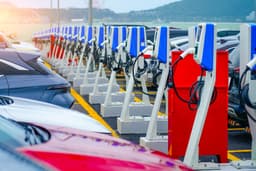
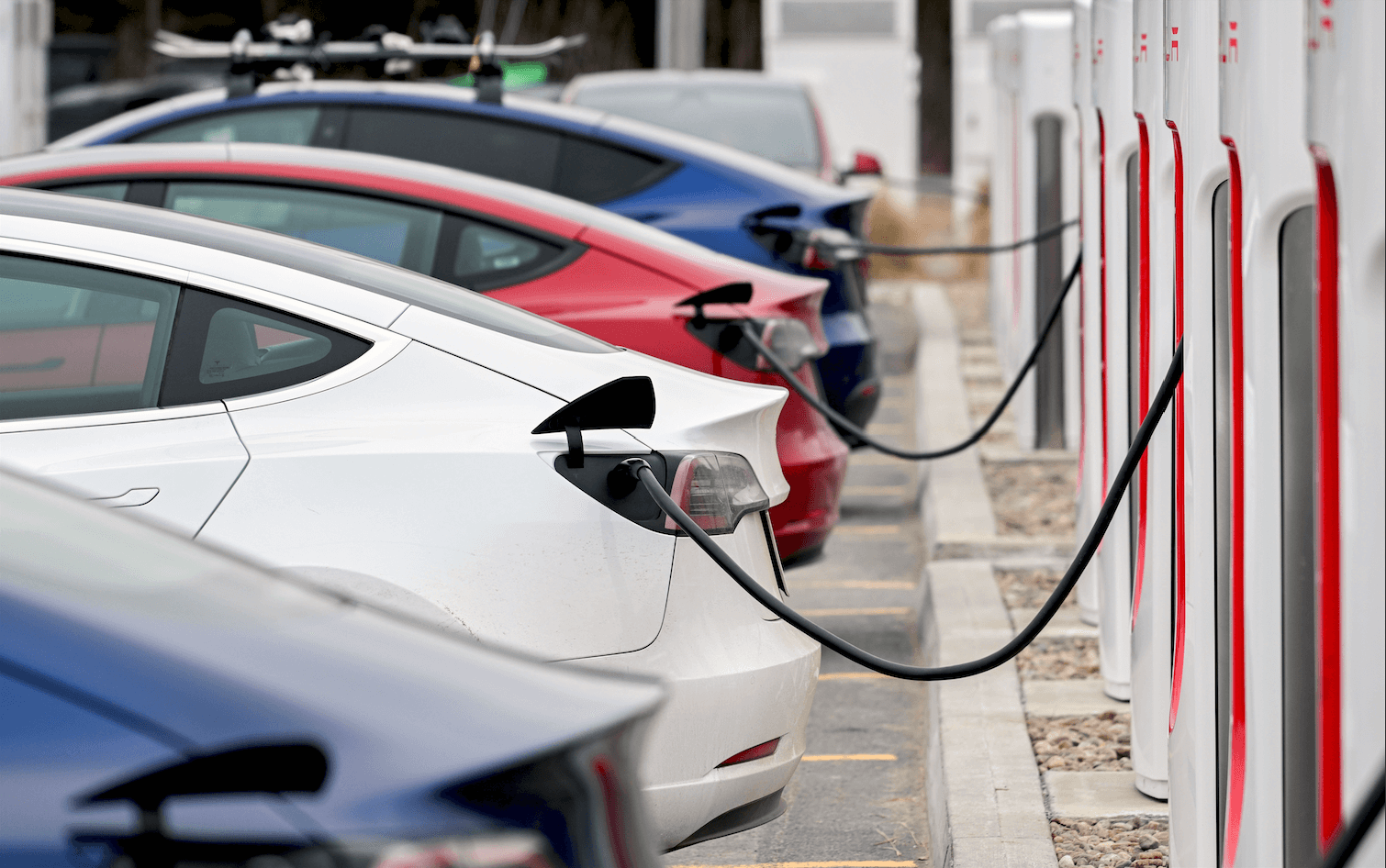
The new stations coming online are mostly DC Fast Chargers (DCFCs). Strategically positioned along highway corridors and urban hubs, they are vital for road-trip flexibility and range confidence. The supply is rising, but demand is rising faster.
Every major automaker now has multiple EVs in its 2025 lineup. Fleet conversions are accelerating. Ride-sharing companies are also electrifying their vehicles. The result is a network under strain. Not because EV charging infrastructure expansion has failed, but because EV adoption is rapidly growing.
For charging operators, the immediate issue isn’t coverage, it’s capacity management. It’s a tough challenge to predict usage spikes, balance grid loads and maintain uptime at busy nodes.
Dynamic EV Charging Pricing Trends
Public charging pricing should be straightforward. Either flat fees or time-based rates that clearly undercut gasoline. This simplicity is starting to fade.
Across several Canadian provinces and U.S. states, per-kWh costs are rising as operators adjust to higher utility rates, maintenance overheads and software integration costs. Some networks have begun implementing dynamic pricing to manage peak-hour congestion, similar to surge pricing in other on-demand industries.
These adjustments might make economic sense to improve network stability, but they also introduce uncertainty for drivers. Especially if said drivers rely primarily on public chargers.
For fleet operators, delivery services or multi-tenant property managers, these shifts are like a puncture on their operational budgets and planning. So now charging is more than just an infrastructure issue, it’s also a cost-optimization exercise.
That's where smart charging and community driven solutions like RoadToEV come in.
Enter RoadtoEV: Public + Peer-to-Peer EV Charging
As the economics of public charging evolve, the industry’s next opportunity lies in diversification. Not replacement.
Public DC fast charging will always be essential for highway travel, long-distance logistics and emergency top-ups. But for predictable, daily, or overnight charging, a distributed peer-to-peer model, like RoadtoEV offers a more stable, affordable complement.
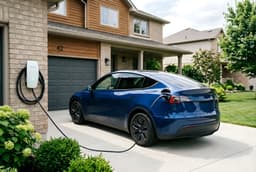
Apps like RoadtoEV enable homeowners to list their private L2 chargers and make them available to nearby EV drivers. For businesses and infrastructure planners, this introduces flexibility without new capital expenditure. It’s a network built from existing assets.
For EV drivers, it’s a way to manage costs and convenience. A scheduled home-host session can be 30–40% cheaper than an equivalent DCFC charge, depending on a few parameters. For homeowners, it transforms idle infrastructure into a steady revenue stream.
This hybrid charging ecosystem, blending public and community assets, could be the key to relieving the very pressures now forming in public networks.
“The future of EV charging isn’t about choosing between public or private infrastructure, it’s about connecting them.” says Neeraj Garg, Founder and CEO, RoadToEV. “At RoadToEV, we’re building the bridge that lets everyday charger owners become part of the solution, making EV access smarter, faster, and more sustainable for everyone.”
Reducing EV Charging Wait Times
Public stations might multiply but they can’t always guarantee availability. Queues will still form during peak hours or travel weekends. And then there’s the issue of broken chargers.
Curiously, peer-to-peer charging can offer predictive scheduling and guaranteed bookings. Through RoadtoEV app, drivers can book a session at a listed home charger, knowing it will be available when they arrive. That kind of reliability improves convenience, reduces wasted trips, range anxiety and so much more, including the demand on public chargers.
For fleet operators or delivery services, there are smart charging solutions like integrating booking capabilities into route planning software, that could further optimize uptime and costs.
Infrastructure Providers Pay Attention
Peer-to-peer models complement traditional EV charging infrastructure providers, not compete with them.
- Load balancing: Distributed home charging can reduce the strain on high-demand public chargers. They also help stabilize and reduce grid peaks.
- Network visibility: Aggregators like RoadtoEV integrate data from different hosts, helping providers understand the demand patterns without direct infrastructure ownership.
- Policy alignment: Governments aiming to accelerate charging accessibility can achieve scale faster through community-driven networks, reducing the need for heavy public investment.
TL:DR is collaboration over competition. Public networks remain the backbone of mobility, but distributed hosting fills the daily-use gaps that high-power chargers can’t efficiently serve.
Why More Consumers Should List Their Chargers
One of the silent barriers to peer-to-peer adoption is psychological, not technical. Many home EV charger hosts hesitate to list their chargers due to concerns about safety, privacy or effort.
However, data from early adopters shows that once hosts list their chargers and complete a few sessions, confidence rises quickly. Much like early home-sharing or ride-sharing models, the social normalization of EV hosting follows exposure and trust.
This is where thoughtful design, like verified user profiles, clear insurance frameworks, and transparent pricing, becomes crucial. RoadtoEV’s model does exactly this with verified hosts, cashless transactions and easy-to-book sessions. For businesses in the ecosystem, that’s a proven framework worth integrating with.
Join the growing network at RoadtoEV.com or download the RoadtoEV app to be part of the EV charging revolution.
Next Stop: EV Utopia
Public charging growth can become a success story with time. It can demonstrate how policy, investment, and innovation can align to reshape mobility. But it will still only be part of the solution.
As infrastructure matures, the focus will shift from “more chargers” to “smarter access”. With optimized costs, convenience and grid stability. This will be across a mix of public, private and peer-to-peer assets.
Apps like RoadtoEV represent that evolution, bridging the gap between large networks and individual hosts, ensuring that every kilowatt of available charging capacity finds a driver who needs it.
In 2026 and beyond, sustainable EV infrastructure won’t just be about how fast we can charge but how intelligently we can share.
Download RoadtoEV on all major app stores and list your L2 Charger and discover the ease of charging from a P2P network. To learn more about how RoadtoEV, visit RoadtoEV.com
For EV Auto Makers, Home L2 Charger Manufacturers and Public Charger Operators, and other businesses looking to partner with RoadToEV app contact marketing@RoadtoEV.com