





The Great Capacity Crunch: Can North America Build Charging Sites Fast Enough?
North America’s EV market is accelerating like it’s in ludicrous mode. It’s exactly the way forecasters promised and utility companies quietly feared. More drivers, more fleets, more watts on wheels. Meanwhile, behind the scenes, a simple question is being persistently asked at government tables and utility planning meetings: Can we actually build charging sites fast enough to keep up?
At the moment, the numbers are not on our side. Not for the lack of trying or capital. It’s simply because construction isn’t scaling at the speed of the market. Every piece of the EV charging pipeline, right from permits, interconnection, utility upgrades, labour availability, land access, etc. are lagging behind EV sales by a large margin.
This gap is creating a capacity crunch that slowing consumer confidence, limiting access and increasing fleet transition timelines.
But, and this is important, public infrastructure isn’t failing. It’s just unable to carry the whole load. And this is exactly where a peer-to-peer charging model like RoadtoEV can make the difference. It’s an immediate pressure valve for a strained system.
Let’s break down what’s driving this crunch, what policymakers are doing to fix it and how RoadtoEV can stabilize a grid-tied future that’s growing super fast.
EV Adoption Going Full Steam Ahead
EV adoption across North America has kept moving forward, much faster than the EV range. Here’re a few impressive facts.
- The US crossed 1 million EV sales in 2023, 2024 and 2025.
- Canada’s ZEV mandate is locked in for 2035 and already shifting demand.
- Fleet electrification is accelerating faster than projections (especially in logistics and municipal sectors.)
- Used EVs are entering the market, expanding adoption across more income brackets.
Excellent news!! But charging construction isn’t even close. Canada’s public charging network grew about 24% year-over-year in 2025. It’s steady progress, very impressive, but not even close to enough for the next wave of urban condo dwellers, commercial fleets and cross-country travellers.
The US is picking up the pace. But deployment is uneven. And many states are still short of EV charging stations relative to population density.
Interconnection: The Slo-Mo Traffic Jam
If permitting is a headache, think of interconnection as a full-body migraine.
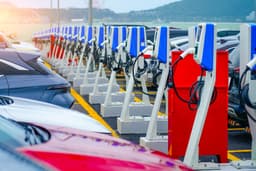
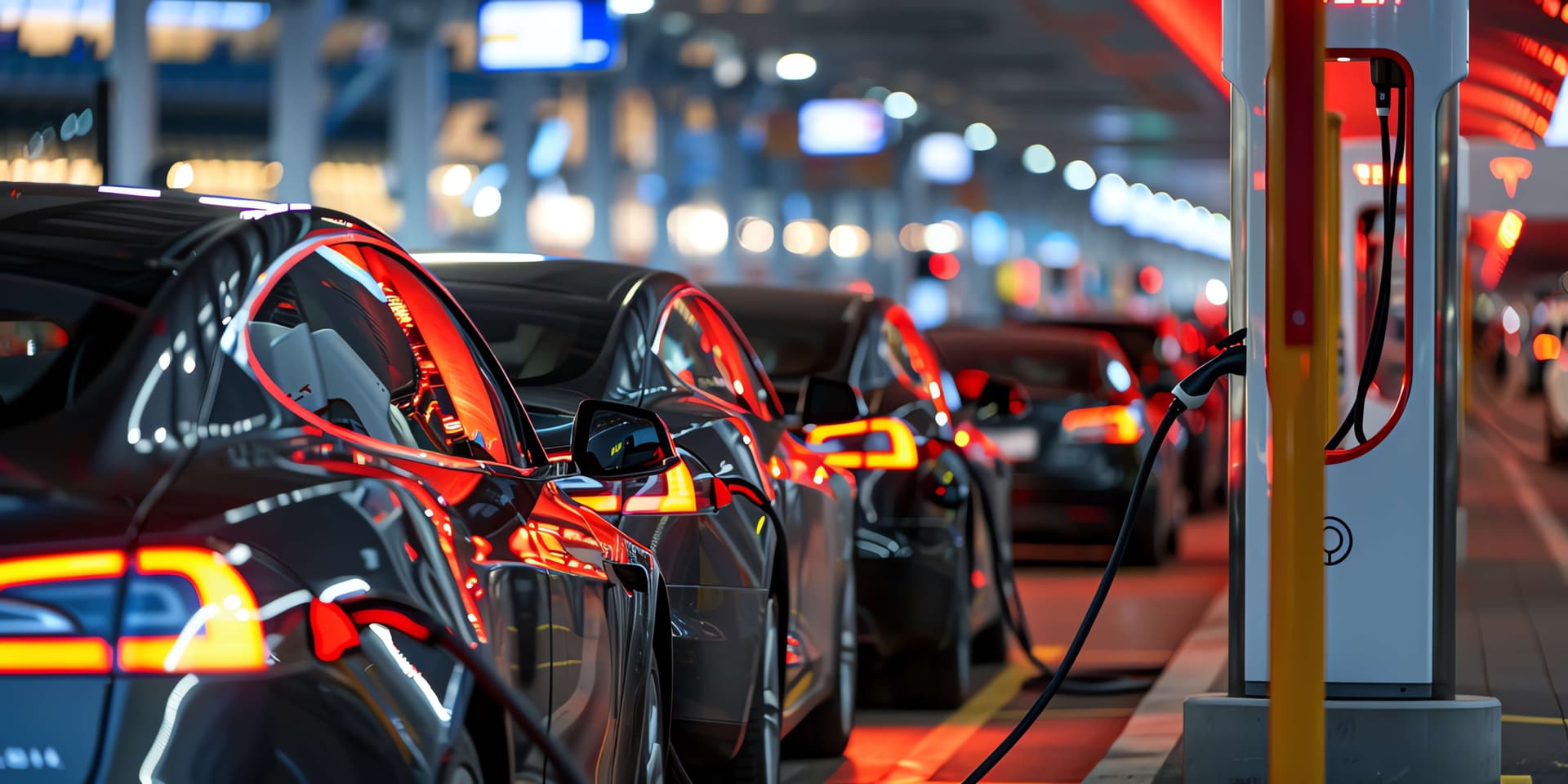
Utilities are receiving unprecedented volumes of upgrade requests for DC fast charging sites. A 4 - 6 stall DCFC installation can require as much power as a small industrial facility. Now, imagine this across retail parking lots, highway stops, urban garages, fleet depots, and multi-unit retrofits. Imagine the queue.
Common bottlenecks include transformer shortages, capacity constraints, substation upgrades, staffing limits inside utilities and complex cost-allocation rules.
Fast charging is essential for highway corridors and convenience. But it also requires infrastructure timelines that simply aren’t feasible.
By contrast, RoadtoEV, which is a P2P distribution L2 model, uses existing residential power. It bypasses interconnection altogether, making it an immediate release valve while utilities scale up long-term grid capacity.
Permitting: Choose Your Own Adventure
A developer’s favourite line is permit timelines are a vibe. A nice way of saying unpredictable.
Municipalities want the EV infrastructure. But the process is complex. It involves zoning rules, fire codes, engineering approvals, environmental assessments and much, much more.
Two sites can be a few kilometres apart but have entirely different permitting timelines depending on municipal staffing, local bylaws or simply the order in which the application was opened.
NEVI and ZEVIP funding help site economics, but they do not accelerate permitting in any meaningful way.
RoadtoEV sidesteps this issue completely. Hosts already have installed and inspected chargers. RoadtoEV simply connects drivers to available capacity and manages bookings, compatibility and secure payments. No municipal friction required.
Workforce Constraints: Another Layer of Delay
North America has a shortage of:
- Certified electricians for DCFC installations
- Utility planners specializing in EV loads
- Inspectors trained on high-power EV equipment
- Engineering firms available for multiple concurrent deployments
The workforce is growing, but still has to play catch up to match the volume of already funded charging projects.
RoadtoEV and P2P charging isn’t meant to replace public infrastructure, it simply shifts a substantial portion of routine daily charging demand to a network that requires no construction, no grid work and no specialized crews.
Policy Efforts: Start-Stop-Go Traffic
The US has NEVI, injecting billions into the buildout of reliable highway fast charging. Standards are improving. Coordination is rising. And OEMs, charging networks, and states are finally aligned.
But NEVI sites still require grid capacity, construction crews, transformers, permitting, inspections and more. In other words, money speeds things up, but not enough.
Canada has ZEVIP, which prioritizes L2 deployments at workplaces, condos, public destinations and community sites. It’s making good progress but the biggest bottleneck are the dense neighbourhoods without driveways or private parking.
A public charger on a main street doesn’t help someone five blocks away who gets home at 10 PM and has nowhere to plug in.
This is where RoadtoEV shines.
RoadtoEV: A Pressure Valve, Not Replacement
The idea isn’t to avoid public infrastructure, it’s to support it. P2P home-hosted charging solves several problems simultaneously.
- Instant capacity, no construction
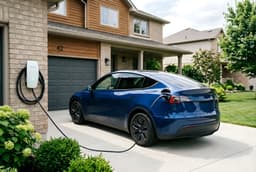
Every L2 charger in a driveway represents capacity that already exists today. RoadtoEV mobilizes it. The system doesn’t need permitting, equipment, substation work, the works. It simply requires homeowners willing to list their charger.
- Predictable charging
RoadtoEV allows drivers to see chargers in advance, crucial for long drives, errands or weekend trips. Instead of hoping a public charger is free, drivers can secure a schedule and plan around it.
- Urban charging gaps shrink overnight
Condo dwellers, aka multi-unit residents, are one of the biggest segments slowing EV adoption. With RoadtoEV, they get access to neighbourhood charging via hosts only a few blocks away.
- Utilities get breathing room
P2P charging reduces peak demand. It gives utilities the time needed to expand distribution capacity without compromising reliability. It gives it the breathing room it requires.
- Plan new outings
RoadtoEV isn't just a charging solution. Drivers can book a charger and then visit local shops, sample the local cuisine, take a trail hike, explore neighbourhood attractions. Charging becomes an outing, not an errand.
Are we there yet?
Not without systemic reform across permitting, interconnection and labour development. But we can build smart enough to meet demand if we combine public investment with p2p charging.
The path forward isn’t either/or, but hybrid. With public DC fast charging for long-distance and convenience. Workplace and fleet charging for daily operations, and community-based L2 networks, like RoadtoEV, to absorb everyday demand and stabilize the system.
Public infrastructure is the backbone. Distributed charging is the pressure valve that keeps the system running while the backbone expands. And RoadtoEV is already operational and growing, and helping drivers charge more predictably, while easing pressure on public resources.
Download the RoadtoEV app to see how p2p charging can stabilize and improve public charging networks. List your home charger, or book one nearby, and help build the network that powers the next EV revolution.
Available on all major app stores. Learn more at RoadtoEV.com
For EV Auto Makers, Home L2 Charger Manufacturers and Public Charger Operators, and other businesses looking to partner with RoadToEV app contact marketing@RoadtoEV.com