





Urban Charging Fixes: How Community Hosts Close Apartment and Curbside Gaps
It’s common knowledge in the EV industry where the bottleneck lives. Yes, in the cities. The dense, vertical environments that house most of North America’s future EV drivers are also the hardest places to charge them. About 38% of condo or multi-unit residents in Canada lack EV charging spots. Which means home charging, hailed as the quiet hero of EV adoption, isn’t an option.
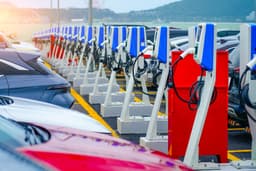
Municipal networks are trying their best to keep pace. We’re seeing curbside pilots in major metros, and a 24% year-over-year rise in public charging points across Canada alone. It’s uplifting to see the expansion has been steady. However, the demand is growing faster.
Even optimistic projections show urban charging utilization rates staying high. This means more wait times, higher pricing volatility and of course, user frustration, which doesn’t bode well for long-term electrification goals.
The fix? In 2025, community-based, peer-to-peer charging is proving to be one of the smartest, most scalable answers.
Filling The Missing Middle in Urban Charging
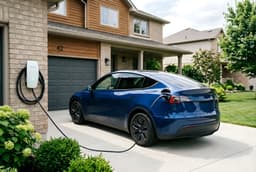
Public charging infrastructure is designed to scale. But it’s not designed to be hyperlocal, something that urban EV drivers need. On the other hand, private home chargers sit idle an estimated 80–90% of the time. Between these two poles there’s a missing middle section of the EV charging ecosystem. Home EV Chargers that could be opened, safely and profitably, to the community.
That’s the plan behind RoadtoEV’s community host model.
Instead of waiting for cities to retrofit EV charging curbs or for utility companies to install new hardware, RoadtoEV app lets existing home charger owners list their units on the app. Nearby drivers can book sessions, plug in, and pay directly through the platform. For homeowners, it’s a simple way to monetize an existing asset. For drivers, it’s an easy way to charge where public options are scarce or inconvenient.
The result? Urban areas suddenly have a decentralized, flexible layer of access that grows organically with demand. Without massive capital investment or zoning hurdles.
Why This Makes Sense
In policy circles, equitable access to EV charging has become a central theme. Policy makers and regulators are under pressure to ensure apartment dwellers, renters and lower-income households aren’t locked out of electrification simply because they don’t own a garage.
Peer-to-peer hosting effortlessly erases that inequity. By turning private chargers into semi-public assets, RoadtoEV’s network brings the benefits of home charging into the shared economy. This extends the grid into neighborhoods without new wires or bureaucracy.
It also complements, not competes with, public infrastructure. While DC fast charging is best for highways and fleet logistics, community charging thrives in residential clusters. The two form a synergistic ecosystem together.
High-speed nodes for long-distance travel, and peer-to-peer local options for overnight or mid-day top-ups.
The Economics of Urban Charging
For network and utility operators, the appeal of peer-to-peer charging isn’t just social, it’s also economic. Building new urban charging stations is expensive and exhausting. In terms of capital outlay, grid reinforcement and red tape.
But leveraging existing home chargers is a low-cost, high-impact way to improve coverage and balance demand.
Each listed home charger adds to the capacity of the city’s charging pool without a single new transformer. Multiply that by thousands of willing homeowners, and you’re effectively adding an invisible micro-grid that stabilizes local access and flattens load peaks.
From the host’s side, the math is mathing. Listing a charger on RoadtoEV can offset personal charging costs, help recoup hardware investment, and turn idle time into passive income.
RoadtoEV manages everything from booking, payment and user verification. Which makes it frictionless for hosts, and reassuring for guests.
Trust, Tech, and the RoadtoEV Difference
If the peer-to-peer concept feels familiar, it’s because we’ve seen it work across every major sharing economy. From short-term home rentals to car-sharing. Now we’re seeing it enter the EV charging domain, made viable due to trust and technology.
RoadtoEV’s app handles real-time availability, secure payments and verifies user profiles. Homeowners can set their own rates and availability windows. Drivers can filter by location, charger type, or amenities. In other words, they know exactly where they’re going before they arrive. And the platform’s community rating system makes certain there’s transparency and accountability on both sides.
What’s unique to RoadtoEV is its integration of host control with user convenience.
Hosts can approve bookings or set automated scheduling, while drivers benefit from a carefully curated network of dependable residential EV chargers. That human layer, a real person behind each listing, helps create reliability that cold infrastructure can’t replicate.
How It Fits Into 2025’s Urban Strategy
Across North America, cities are looking to rewrite and bolster their EV roadmaps. Yet municipal funding cycles are long, permitting is complex, bureaucracy is unlimited and real estate is limited. The fastest gains will come from collaborative ecosystems, not solo efforts.
RoadtoEV’s model complements every piece of that puzzle. It supports municipal sustainability goals by expanding zero-emission mobility access; it helps utilities manage distributed demand through predictable, scheduled bookings; and it gives private citizens a way to participate directly in the EV transition.
In other words, community charging is a strategic accelerator for electrification.
Building the Future Block by Block
In 2025 and heading into 2026, innovations in EV charging isn’t only about faster kilowatts. It’s about smarter connections between homes, drivers and neighborhoods. The gaps in urban charging won’t be solved by infrastructure alone, but by networks that empower people to share what they already have.
RoadtoEV embodies this shift. By blending the convenience of home charging with the accessibility of public infrastructure, every street now becomes part of the solution. For policymakers, that’s a glimpse of a scalable, human-centered charging network. For drivers, it’s freedom from detours and dead ends. For homeowners, it’s a way to earn, connect, and contribute to the next chapter of clean transport.
The EV transition has always been about movement. Now it’s also about community.
Download the RoadtoEV app to experience peer-to-peer charging in action. List your home charger, or book one nearby, and help build the network that powers the next EV revolution.
Available on all major app stores. Learn more at RoadtoEV.com
For EV Auto Makers, Home L2 Charger Manufacturers and Public Charger Operators, and other businesses looking to partner with RoadToEV app contact marketing@RoadtoEV.com