





P2P Charging Can Save the Day When It Comes to Fleet Decarbonization
Converting your entire fleet sounds so simple. Buy EVs, install chargers at the depot, track emissions reductions. Ta-daa!
The reality is quite different.
For one, fleets don't circle in and around the depot. They move through the world, navigating chaos on the roads, tight delivery deadlines and wonky routes.
In fact, the biggest challenge in electrifying your fleet is the part you don't really plan for: the last mile.
The Journey Begins
Most electrification plans are built around centralized or public charging. Vehicles return to base, plug in overnight, and roll out the next day fully charged. It's how most residential EVs are used.
But urban delivery is not that neat. Routes run long and winding, there're traffic snarls, and new stops get added. Drivers need flexibility.
And then there's the human side of it, too. Many delivery drivers don't live close to the depot. Some take vehicles home. Others start their day from a different location.
So the question has to be asked: where will they charge?
Yep, this is the blind spot in EV fleet charging.
The Resistance when going electric
For logistics managers, going electric sounds fantastic. Lower operating costs, regulatory alignment, higher brand value.
For drivers, it's different. What happens when charging becomes inconvenient, time-consuming or uncertain? Of course, adoption will be difficult.
A driver who has to detour to find a charger, wait in line, or worry about making it back to base with enough range is going to have additional stress every single day.
And over time, this resistance will burn the system out. It's why closing the last mile loop needs to take human behavior into consideration.
Chargers Wanted
Of course, depot charging is essential. Consider it the backbone of electrifying your fleet.
But what happens when a vehicle needs a midday top-up to complete its route? Or a driver starts their day from home? Depot charging isn't designed to handle everyday life.
And it can't be solved with more public chargers. For one, centralized infrastructure is expensive, slow to scale, and often misaligned with how fleets actually operate.
Enter P2P charging
Here's how we see it. Instead of building more infrastructure, what if you could activate the chargers already present?
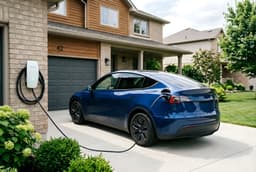
Across cities, suburbs and residential neighbourhoods, there are thousands of privately owned L2 chargers sitting idle for most of the day. Collectively, they represent a massive community charging network hiding in plain sight.
That's the foundation of commercial P2P charging.
Apps like RoadToEV connect these chargers to drivers who need them, turning private chargers into accessible, on-demand infrastructure.
Solving the last mile
Fleet operators now have a practical solution. Instead of forcing charging in a centralized depot, they can extend the network outward, and into the neighbourhoods where their drivers live and work.
Now, a midday top-up doesn't require a long detour and an early morning start doesn't depend on a full charge from the night before. That end-of-day buffer becomes easier to manage.
The difference is charging happens closer to where the vehicle actually is, and not where the infrastructure happens to be.
P2P charging solves the last mile conundrum.
From perk to performance
Here's something companies overlook (but has big ramifications). The employee experience.
As fleets electrify, companies are asking drivers to adapt. They need to change routines with new habits, and some new constraints. It is vital to support this transition. It's good for business.
By offering subsidized access to a neighbourhood charging network, companies can turn a potential pain point into a meaningful employee charging benefit.
Instead of asking drivers to figure it out on their own, they now have a reliable solution built into their workflow which reduces frustration and increases buy-in.
Any business owner will agree.
An electrifying partnership
No, we don't mean simply handing drivers a list of chargers and crossing fingers. We're talking about integrating P2P charging into your fleet strategy.
A corporate partnership with RoadToEV can enable logistics companies to provide drivers with easy access to nearby chargers, subsidize charging costs as part of benefits, track usage and optimize charging patterns over time. And best of all, they can expand coverage without any investment.
It's a model that grows as your fleet expands.
What about ROI?
Traditional infrastructure expansion has always required an upfront investment. Sometimes it's quite significant.
P2P charging, on the other hand, doesn't require any assets or investment. You're leveraging existing infrastructure, paying for usage and scaling as needed.
Here are the additional benefits: Reduced downtime from charging delays, more efficient route planning, and more efficient vehicle utilization.
Future-proofing
The pace of change in EV adoption will only keep accelerating. Which means the systems you put in place today need to be adaptable.
Relying only on centralized charging will create a bottleneck. But incorporating distributed, on-demand solutions like RoadToEV's P2P charging makes your strategy more resilient and responsive. It's also more aligned with how urban delivery actually works.
Depot charging is already there, this is the last mile coverage.
The takeaway
The success of your fleet electrification is not determined by how many chargers you have at your facilities. Rather by how well your vehicles manage beyond them.
The last mile isn't a small detail. It's where driver experience is shaped, where electrification either works or not. It's where efficiency is won or lost.
By extending your charging network into the communities your drivers move through every day, you remove one of the biggest barriers to adoption. And you don't have to wait years for new infrastructure to catch up.
Sometimes, the fastest way forward isn't building more, it's simply using what's already there, better.
Download the RoadToEV app to see how winter EV driving can become effortless. List your home charger, or book one nearby, and help build the network that powers the next EV revolution.
Available on all major app stores. Learn more at RoadToEV.com
For EV Auto Makers, Home L2 Charger Manufacturers and Public Charger Operators, and other businesses looking to partner with RoadToEV app contact marketing@roadtoev.com