






Why Property Developers and Condo Boards Should Partner with RoadToEV.
The Ultimate Amenity is here.
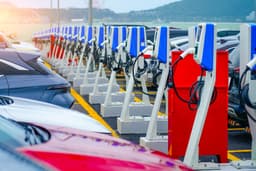
With the recent acceleration in EV car ownership, many property developers and condo boards are starting to consider installing EV chargers in condo buildings.
But in most multi-unit buildings, this isn't a simple task. Before they wonder how many chargers should be installed, they need to consider that electrical capacity is limited, and retrofitting older garages may require transformer upgrades. This means load management systems need to be designed and approved. Costs escalate quickly, and timelines may stretch for months. Or years.
Meanwhile, residents are already buying EVs.
So, tenants and condo owners want charging access now. Meanwhile property managers struggle with the practical realities of it. It's a familiar tension playing out across many cities.
But what if instead of devising ways to install chargers, builders and condo boards asked a different question. Like, how to provide EV charging access immediately?
This can spark new ideas. And the RoadToEV app is one of them.
Infrastructure Situation
Across North America, it's logical to assume multi-unit dwellings (aka condo apartments) face huge obstacles with EV adoption.
Unlike single-family homes, condo buildings and apartment complexes share electrical infrastructure across dozens or hundreds of units. Which means adding several L2 chargers can require a lot of expensive changes from electrical panel upgrades and new transformers to structural modifications in parking garages.
In older buildings, the wiring simply wasn't designed for this level of demand. Even new developments face these planning complexities. Developers have to balance parking layout, electrical design, construction costs and future projections.
For condo boards, making these infrastructure upgrades requires special assessments, resident votes and a lengthy procurement process.
So you can expect charging access to lag behind EV adoption.
The Amenity Gap
In today's real estate market, EV charging has become an expected amenity. Buyers and renters do ask about charging access during property tours. Real estate listings already highlight EV-ready parking as a premium feature.
But here's something to consider, installing chargers everywhere is not always financially or technically feasible.
Developers and condo boards are stuck between rising expectations and real infrastructure limitations. Here's where the idea of access, over installation, comes in
Getting Access
Providing EV access doesn't mean owning chargers.
Think about how building amenities work and are shared among residents. A residential building might promote proximity to public parks and transit hubs, nearby gyms or neighborhood cafés as part of its lifestyle offering. The building doesn't own those assets, but residents still benefit from them.
Charging can be the same.
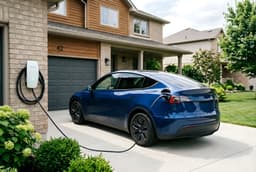
With distributed networks like RoadToEV, homeowners list their private L2 chargers for others to book. Drivers can reserve charging sessions at nearby homes and businesses.
For condo residents, especially those without dedicated chargers, these hosts effectively become extensions of their home charging options.
Now, the building can offer EV readiness without installing a single new charger.
A Charging Solution
For developers and property managers, this model solves several practical challenges.
For one, it eliminates immediate investments. Installing dozens of chargers in an underground garage can cost over $100,000.00 when electrical upgrades are included.
For another, it avoids long implementation timelines. Retrofitting electrical infrastructure can take months to years. From feasibility studies to final installation.
Plus, it provides flexibility. As EV adoption grows within the building, the property can look at long-term charging installations while residents already have access to nearby chargers.
In other words, RoadToEV and community charging networks act as an interim and complementary solution, not a replacement for future infrastructure.
Increasing Property Value
From a real estate POV, EV readiness is becoming an important differentiator. Properties that provide EV charging solutions attract more buyer interest. Especially from EV owners and those who plan to make the switch.
For developers, being able to market EV charging access without waiting for its EV charging set up to be complete, provides an immediate advantage.
For condo boards, offering residents a practical charging option improves satisfaction and reduces pressure on limited chargers within the building. (If there are any.)
Even a simple partnership that connects residents to nearby hosts can transform conversations. Imagine going from, we don't have charging, to, here's how you can charge starting this week.
Supporting Residents Without Dedicated Parking
Another major challenge in condo housing is parking access. Not every resident has an assigned space. Some rely on visitor or street parking, or shared garages with rotating availability.
It's not feasible or possible to install chargers for every parking configuration. But community charging bypasses this.
Residents can now charge at nearby homes within walking distance. They can do this overnight or during regular downtime. Instead of relying on the building's EV charging infrastructure, they have access to the broader community charging.
Aligned With Government Policy
Government EV policies are geared around making EV charging more accessible. Federal and provincial programs support charging infrastructure in condos. However, even with incentives, installation is slow and expensive.
At the same time, policymakers recognize the value of community charging. Residential chargers are already connected to the grid, and they represent a growing pool of capacity that can support EV adoption (if made accessible.)
Community charging aligns with this policy direction. It merely unlocks infrastructure that already exists. For municipalities and housing authorities looking to expand electrification, this is a scalable and low-cost complement to public charging investments.
Community is Everything
There are intangible benefits to community charging, too. When residents charge at nearby homes, local streets are now part of the EV ecosystem. Charging spreads across neighborhoods instead of being concentrated at public stations.
This creates a more resilient charging network. Which also reduces pressure on charging infrastructure.
For developers and condo boards, being part of this ecosystem shows the commitment to sustainability without requiring major construction projects.
A Bridge to the Future
This doesn't mean buildings should abandon plans to install their own chargers. In fact, all properties should incorporate some level of charging infrastructure as EV adoption continues to grow.
But those projects take time. Community charging networks can function as a bridge solution that allows properties to deliver value today while planning for long-term upgrades.
Residents gain reliable charging access immediately. Developers can offer a compelling amenity. Condo boards reduce frustration around charging. Everyone moves forward without waiting for major investments and infrastructure.
EV-Ready Today
For years, the phrase EV-ready building implied installed chargers or expensive electrical upgrades. But the concept seems to be evolving.
EV readiness can mean residents have dependable charging access, whether that infrastructure sits inside the building or just down the street.
By connecting residents to a network of nearby hosts through apps like RoadToEV, property developers and condo boards can offer a practical solution right now.
No new construction, upgrade or electrical redesign. Just access. And this might be the most valuable amenity of all.
Download the RoadToEV app to see how EV charging can help you find reliable charging wherever you live. List your home charger, or book one nearby, and help build the network that powers the next EV revolution.
Available on all major app stores. Learn more at RoadToEV.com
For EV Auto Makers, Home L2 Charger Manufacturers and Public Charger Operators, and other businesses looking to partner with RoadToEV.com app contact marketing@roadtoev.com