





Community Charging Networks To Fill Infrastructure Gap
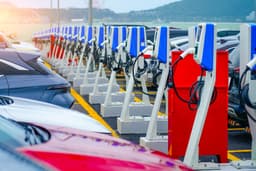
Public funding has transformed the roadmap of EV infrastructure in North America. Initiatives like NEVI in US and ZEVIP in Canada have caused billions to flow into building out fast charging and urban charging hubs. These programs are essential. They provide backbone infrastructure and create confidence for long-distance travel.
However, they do not solve the last mile gap.
The next phase of EV adoption will be determined by whether drivers can reliably charge where they live, work and spend time. Not if they can travel reliably between cities.
And this is a traffic bottleneck. Because it's where public and large private infrastructure face roadblocks. Not because of lack of funding or intent. It's simply economics and timelines.
But there is a solution. Community charging networks are emerging as the agile layer that fills this gap. Not to replace but complement NEVI or ZEVIP. They will provide immediate, distributed capacity exactly where centralized infrastructure struggles.
The Infrastructure Gap in Neighborhoods
NEVI has been effective at targeting Alternative Fuel Corridors. ZEVIP has funded installations across municipalities, commercial sites and public destinations. They prioritize accessibility and geographic coverage.
But issues generally crop up in neighborhoods, not highways.
Consider this scenario: a typical urban or suburban EV owner living in a condo apartment without an EV charger. They may rely on street parking and may have access to public charging within a few kilometers. Definitely not within walking distance. This creates a daily or weekly charging dependency that public infrastructure was not designed to solve.
Public fast charging is not designed or optimized for routine, neighborhood-level access.
On paper, a city may meet infrastructure density targets. In practice, it doesn't reach where drivers actually live.
This is the last-mile gap.
Permitting and Interconnection Are Structural Bottlenecks
Infrastructure timelines encounter bottlenecks by processes that cannot be accelerated easily. Even when funding is secured.
Permitting timelines in major North American cities can range from six months to over two years. Especially when installations require electrical service upgrades, site modifications or public approvals.
Interconnection queues also cause delays. Utility companies must first assess load capacity, transformer availability, feeder constraints and grid stability before breaking ground.
In many towns and cities, infrastructure was not designed for concentrated high-power loads that DC fast charging plazas require. Which means, upgrades may require transformer replacements, feeder extensions or sub-station enhancements.
These are necessary steps to ensure grid reliability. But they create deployment timelines that don't keep up with the pace of EV adoption.
This mismatch creates shortages, even though infrastructure appears to be expanding.
The Cost Structure Limits Geographic Coverage
DC fast charging infrastructure requires substantial capital investment. Fully installed costs for a single fast charging port starts from $100,000 to over $250,000 depending on power level, site conditions and grid upgrades. Multi-port sites can exceed $1 million.
This forces rational deployment decisions. Infrastructure is prioritized for high-utilization corridors, commercial retail sites and dense urban nodes. This is where utilization rates can justify capital investment.
But this leaves large portions of suburban and residential geography undeserved.
The Hidden Capacity Already Exists
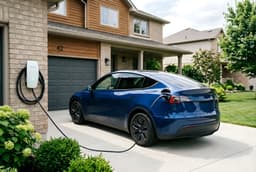
While public infrastructure faces these constraints, millions of L2 chargers already exist across North America. They are installed in private homes, condos, workplaces, and small businesses.
Most of these chargers are underutilized.
Residential L2 chargers, in particular, are idle the majority of the day. A typical EV may charge overnight for several hours, leaving the charger unused for the remaining 16 to 20 hours. This represents an enormous asset pool embedded directly within communities.
From an infrastructure perspective, this capacity is already fully permitted, interconnected and operational. The grid impact has already been assessed and the capital has already been deployed.
The only missing layer is access.
RoadToEV Unlocks Distributed Capacity
Community charging networks like RoadToEV transform private chargers into accessible community infrastructure.
Instead of relying solely on centralized installations that require years to deploy, community charging networks unlock existing assets immediately. Every residential charger becomes a potential charging node. Every participating home increases infrastructure density at precisely the location where demand exists.
This model completely changes infrastructure scaling dynamics.
Traditional infrastructure scaling requires capital deployment, permitting, construction, and interconnection. Community network scaling only requires software, coordination, and participation.
Community Charging Improves Reliability and Resilience
Centralized infrastructure creates high concentration areas. When a fast charging site experiences outages, maintenance issues, or congestion, there are few alternatives within close proximity.
Community networks improve system resilience by having more possibilities close by.
Instead of relying on a small number of high-power nodes, charging access is distributed across hundreds (or even thousands) of smaller nodes. This reduces congestion and improves availability. It also minimizes single points of failure.
From a grid perspective, charging via RoadToEV also aligns more naturally with existing residential load behaviors. It avoids the concentrated demand spikes commonly seen with fast charging plazas.
This makes community charging compatible with grid infrastructure, too.
Infrastructure That Scales at the Speed of Adoption
Government programs operate on multi-year planning cycles. Funding allocations, procurement processes and deployment schedules introduce latency periods where nothing seems to move.
Meanwhile, community charging networks operate on user adoption cycles.
When a new charger is added to a community network, it becomes available immediately. There is no construction timeline, utility upgrade or permitting delay.
This allows infrastructure density to scale in real time with vehicle adoption.
This responsiveness is particularly valuable in rapidly growing suburban areas where EV adoption can accelerate faster than planned infrastructure deployment.
RoadToEV is Complementary, Not Competitive
It is important to frame community charging networks correctly. They are not a replacement for NEVI, ZEVIP or private charging networks. Fast charging corridors and public infrastructure are essential for long-distance travel, fleet operations and urban charging.
RoadToEV solves a different problem. They provide proximity and reduce dependence on centralized infrastructure. They fill the geographic gaps between public installations. They provide immediate capacity while permanent infrastructure is planned and deployed.
Both are necessary.
Enabling Adoption Beyond Early Adopters
Early EV adopters typically have access to home charging. This simplifies ownership and reduces dependence on public infrastructure.
Mass adoption will include drivers without dedicated home charging. Condo residents, urban households and more. These drivers require reliable charging access within their daily activity radius. Otherwise adoption barriers remain.
Community charging networks lower these barriers by expanding access using infrastructure that already exists.
The Last Mile on the Road Ahead
North America is building the backbone of its EV charging infrastructure. NEVI, ZEVIP, and private investment are creating the corridors and hubs necessary for long-distance electrification.
But adoption decisions are made in neighborhoods. Not highways. Drivers need to know they can charge near home, near work and near daily life.
Community charging networks like RoadToEV provide this last-mile infrastructure layer. They transform existing private assets into shared public resources. They scale immediately and improve resilience. Most importantly, they align infrastructure growth with the actual demand.
The EV transition will be determined by whether infrastructure exists everywhere needed. The last mile is where that question will be answered.
Download the RoadToEV app to see how community charging networks are reshaping EV adoption. List your home charger, or book one nearby, and help build the network that powers the next EV revolution.
Available on all major app stores. Learn more at RoadToEV.com
For EV Auto Makers, Home L2 Charger Manufacturers and Public Charger Operators, and other businesses looking to partner with RoadToEV app contact marketing@RoadtoEV.com