





Community EV Charging Have The Power To Stabilize Grids
Utility Companies Take Note
Utility companies across North America understand EV adoption is not a future eventuality. It is a today occurrence, well underway.
Every EV represents a new load and a new opportunity. But the real metric is how, when and where they charge.
For example, winter exposes the stakes. Because heating loads peak, energy demand rises and fast-charging utilization increase. Suddenly, the grid faces surges caused by millions of individual charging decisions.
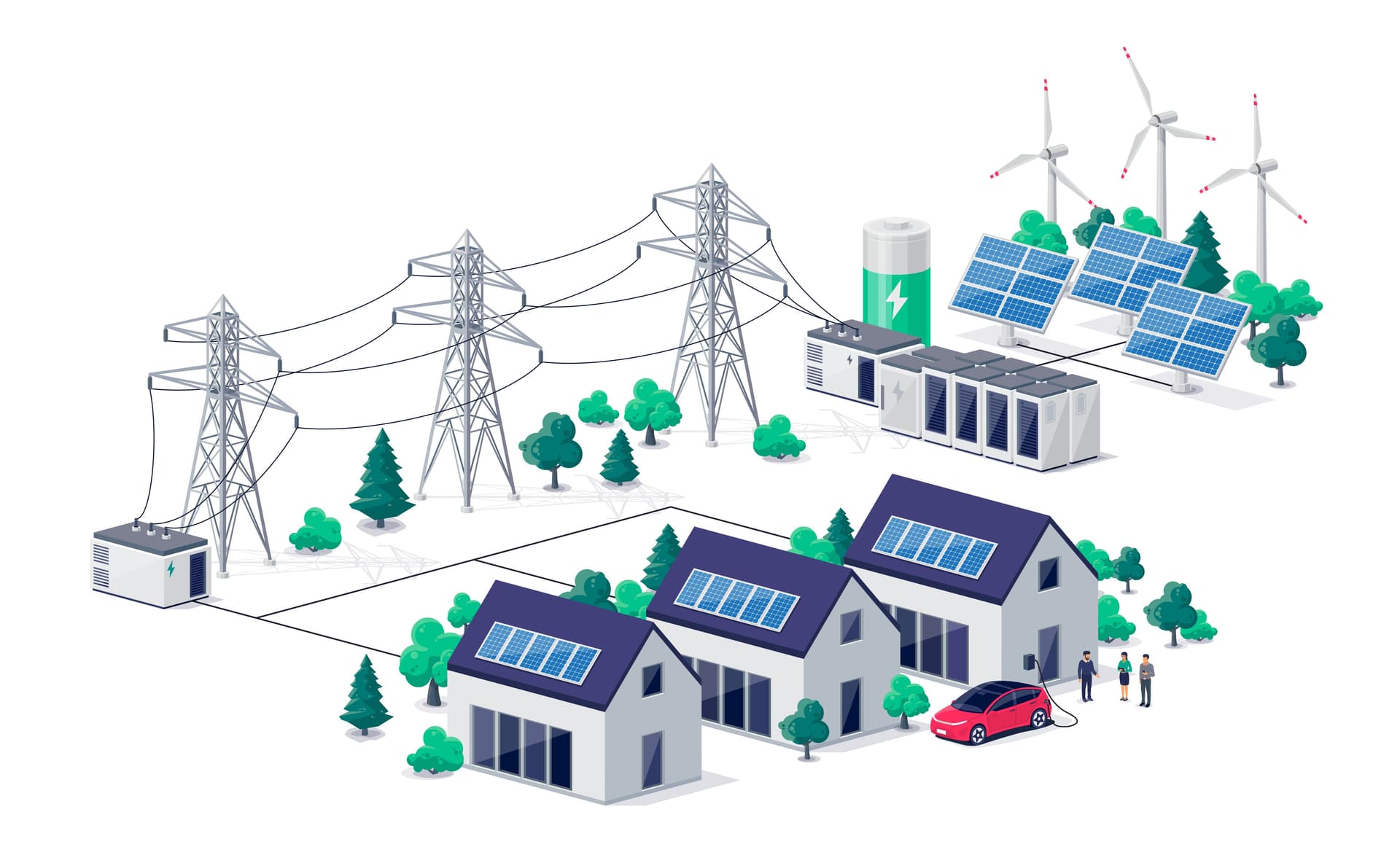
Utility companies have always considered EV charging as a passive load. But that's changing, because when properly coordinated, it can function as a flexible, distributed grid asset.
And community charging network app RoadtoEV makes this most apparent.
The Shift Is Here
The core challenge utilities face with EV adoption is not the total energy demand, rather the high concentration areas.
Most residential charging happens during a predictable window. Either overnight charging, or a pre-morning top-up, because rates are lower then.
This ensures a manageable demand at the neighborhood level. But when adoption reaches 20%, 40% or 60% penetration within a certain area, unmanaged charging can become a grid capacity stressor.
And utility companies respond to these conditions with infrastructure upgrades, like new transformers and expanding substations.
These, however, are expensive and slow. And by the time they're ready, already not enough. There is a more efficient alternative: load orchestration.
Aggregated community charging apps like RoadtoEV introduce a new variable into grid management. They make usage more predictable. Unlike unmanaged charging, scheduled and bookable charging gives insight into future load profiles.
RoadtoEV shifts EV charging from random and reactive, to intentional. For utility companies, this is precious data that can be put to good use.
L2 Chargers Are Already the Largest Charging Network
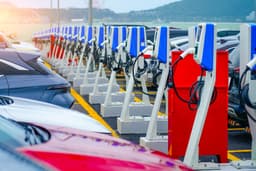
When there's mention of charging infrastructure, it's heavily focused on DC fast charging infrastructure. But most curiously, residential L2 chargers are the largest and fastest-growing charging segment in North America.
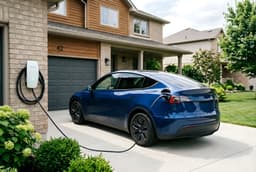
This makes sense economically and behaviorally. Level 2 chargers are cheaper to deploy, less demanding on grid infrastructure and their usage is naturally aligned with certain periods when the car is in the driveway.
And most importantly, they are distributed across neighborhoods, exactly where load balancing matters. Each residential charger represents a 7 kW to 11 kW load, but when aggregated across thousands of homes, this becomes a huge resource.
Unlike centralized fast chargers, residential L2 chargers can absorb demand easily without stressing the grid too much.
The Missing Ingredient: Predictability
Utility companies work by forecasting energy load times. And unmanaged EV charging will introduce variability. With public chargers, drivers plug in when they want, not when the grid prefers.
RoadtoEV introduces an important structural improvement: scheduled charging sessions.
When drivers book, charging events become visible in advance. This creates a forward demand signal that utility companies can incorporate into operational planning.
Predictable loads enable more accurate feeder load balancing, better demand response and lesser reliance on capacity buffers.
Instead of reacting to a load spike after it occurs, utility companies can anticipate and manage them more proactively. This is what it means to have grid stability in an EV-ready future.
Reducing Infrastructure Strain Where It Matters
Grid constraints tend to be local, never system wide. A single transformer can become overloaded and a bottleneck, while an adjacent one can remain untouched.
A community charging network like RoadtoEV can help diffuse this load concentration by expanding available charging locations across a wider geographic area.
Instead of forcing multiple drivers toward a small number of public charging nodes, charging demand is dispersed across neighborhoods.
The effect is a more stable grid. There's reduced peak load intensity at individual nodes, lesser probability of an overload, and a better utilization of current infrastructure. This means costly equipment upgrades can be pushed out further.
RoadtoEV can be called a capacity multiplier.
Demand Response Potential
A demand response program can be the bane of all parties involved. Consumers resist the perceived inconvenience, opt-in rates are generally mid, and vendors try to guess what works.
Through aggregated charging platforms like RoadtoEV, utility companies and charging networks can collaborate to create a demand response programme without affecting driver experience.
Charging sessions can be scheduled during off-peak hours, shifted slightly to avoid peak congestion and distributed across multiple residential nodes.
And because RoadtoEV operates through scheduled bookings, it supports this level of coordination.
Data Visibility
Grid management in today's EV era requires behavioral insight. When, where and how frequently charging occurs.
Community charging networks provide anonymized, high-resolution visibility into charging patterns across neighborhoods.
This data enables utility companies to improve load forecasting, identify emerging capacity constraints and design a more effective rate structure.
Instead of reacting to trends after infrastructure stress appears, utility companies can anticipate demand evolution.
The Need For Flexible Charging Networks
Winter conditions require distributed charging coordination. Cold weather reduces EV efficiency, increasing charging frequency and raising grid demand.
Fast-charging infrastructure often experiences congestion during winter travel months, and drivers seek alternative charging options, preferably closer to their destination.
Residential charging networks absorb this naturally. Community charging platforms allow this demand to expand across a wide geographic area, instead of concentrating at public nodes.
This reduces stress on both public charging systems and grid infrastructure. For utility companies this is the goal.
Utility Partnerships Are The Next Step
Platforms like RoadtoEV are a new category of grid-adjacent infrastructure. They aggregate community charging capacity into a structured network.
This creates partnership opportunities across multiple domains:
Load forecasting: Aggregated charging schedules to improve short-term demand.
Demand response collaboration: Coordinated scheduling to prevent load peaks.
Infrastructure planning: Charging data for smarter investment prioritization.
Customer engagement: Homeowners benefit financially while supporting grid stability.
Distributed Charging Is Not Just a Convenience Layer. It Is Grid Infrastructure
The transition to an EV society requires more than chargers. It also needs smart charging behavior. Home EV chargers represent the most scalable, cost-efficient and well-distributed charging resource.
Aggregated through platforms like RoadtoEV, they become schedulable load, visible to the grid, and stabilize infrastructure.
The future grid will be stabilized by millions of distributed ones working together.
Utility companies that embrace community charging networks today will be best positioned to manage the electrification surge tomorrow.
Download the RoadToEV app to see how community charging networks are reshaping EV adoption. List your home charger, or book one nearby, and help build the network that powers the next EV revolution.
Available on all major app stores. Learn more at RoadToEV.com
For EV Auto Makers, Home L2 Charger Manufacturers and Public Charger Operators, and other businesses looking to partner with RoadToEV app contact marketing@RoadtoEV.com