





How Charger Manufacturers Can Add Value with P2P Readiness
Since home L2 charger became a thing, charger manufacturers have competed on familiar ground. The usual metrics like amps, cable length, smart app features, sleek enclosures, price per unit, etc.
This made sense in the early adopter phase. The value was straightforward. It was faster home charging versus L1, along with cleaner installs and smarter energy management.
Today, we're at a different phase of the market.
As EV adoption moves to the early majority, the buying criteria has shifted slightly. Homeowners are not just asking, how fast does it charge? They also want to know, can I get more from this investment?
At the same time, governments across the U.S. and Canada continue to subsidize home charging through federal, state and provincial incentives. Programs like NEVI and ZEVIP, are enabling billions to flow into public charging, but residential charging remains the backbone because that's where most charging happens.
This creates an opportunity for manufacturers to evolve the narrative. And their offerings.
What if a home charger is more than just a convenience feature? An asset I can earn from?
Untapped Value
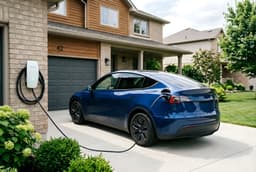
Across North America, hundreds of thousands of L2 chargers sit idle for most of the day, and a few nights a week.
Most homeowners charge overnight. Very few charge during non-peak hours, and fewer still charge at peak hours for more than 1 or 2 hours. The rest of the time, the charger is underutilized infrastructure. From a homeowner's perspective, it's a sunk cost.
Peer-to-peer charging platforms like RoadToEV make something that idle time. They enable homeowners to list their chargers, set availability windows, and earn when other drivers book sessions.
For charger manufacturers, this readiness can reframe their entire product category. They're not just selling a $700–$1,200 appliance, but an asset that can earn back the device, installation, electricity and more.
The Financial Narrative
In a competitive hardware market, differentiation is not as easy. Most reputable L2 chargers now offer: 32 - 48A output, Wi-Fi connectivity, OCPP compatibility, utility demand response integrations and apps.
But adding in P2P charging compatibility, introduces a few more differentiators. Imagine something like this: Smart scheduling, Utility rebate eligibility, Revenue generation capabilities
Now the conversation veers into financial return. Even modest P2P usage can change the recuperation period.
If a homeowner earns $100–$150 per month hosting occasional sessions, the charger effectively pays for itself in under a year. Even at lower utilization, covering the monthly electricity bill or offsetting vehicle charging costs becomes a compelling story.
When manufacturers make this unbeatable value visible, they start to win.
Policy Trends
Canada and US Governments' EV policy take a few factors into consideration. Right from number of units, to utilization and even grid efficiency.
But public fast charging programs tend to have long permitting timelines, backlogs with interconnection, and high capital requirements. While residential chargers are already installed, permitted and connected into the grid.
EV Policymakers are only just starting to recognize the importance of community charging, with respect to load and grid balancing. And they address another policy gap: access for multi-unit dwellings.
For manufacturers, enabling P2P readiness positions your hardware for consumer empowerment, community access and grid stabilization.
And it's strategic alignment with where policy is heading.
Turning Customers into Advocates
Homeowners who earn income from their charger behave differently than those who don't. They value and maintain their hardware more. They will promote it and share the experience socially
As stated before, it's not just a charger, but an asset that helps you recover the set up costs and more.
P2P Readiness
For manufacturers, P2P compatibility doesn't need any reinvention of the product.
Key enablers include API access for session data, secure user authentication protocols, remote scheduling capabilities, dynamic pricing support and integration-ready firmware
Many smart chargers already have the foundational architecture in place. The differentiator is whether you choose to actively support and promote third-party marketplace participation, or leave it as an afterthought.
Forward-thinking OEMs simply need to certify compatibility with platforms like RoadToEV, offer some onboarding guidance and highlight estimated earning calculators.
Expanding the Market
Not every homeowner is motivated by sustainability or performance specs. Some look for practicality. If a charger can reduce fuel costs, qualify for rebates, participate in utility programs and generate revenue, it becomes easier to justify the expense.
This is particularly relevant in price-sensitive segments where EV adoption is accelerating. Manufacturers who position chargers as an income-generating asset can convert buyers who’re on the fence.
Risk Mitigation and Brand Trust
One concern manufacturers may raise is reputational risk. What if a third-party driver misuses a charger? What about safety, liability, or network reliability?
A P2P platform can address these concerns through user verification, transparent ratings and reviews and several other host-assisted features. But from a brand standpoint, supporting structured platforms is far safer than leaving customers to experiment with informal arrangements.
By guiding them toward a trusted ecosystem like RoadToEV, manufacturers strengthen trust.
EV Chargers as Infrastructure
Residential chargers are starting to become part of the community charging landscape. This means, home chargers are no longer simple appliances, but infrastructure, that can be monetized, aggregated, dispatched and serve community needs
Manufacturers need to recognize this shift early on and position themselves as infrastructure partners, not merely hardware vendors. P2P readiness is a stepping stone in that evolution.
A New Category
The home charging market is maturing. The next step of differentiation won't be wattage or color, but ecosystem participation.
By integrating or actively promoting compatibility with peer-to-peer platforms like RoadToEV, manufacturers can increase perceived customer ROI, strengthen product differentiation and create a new marketing narrative
You're not just selling kilowatts, but an income generating machine. And in today's market consumers expect their assets to work for them. So, that's a competitive advantage, and a niche.
Download the RoadToEV app to see how EV charging can become effortless. List your home charger, or book one nearby, and help build the network that powers the next EV revolution.
Available on all major app stores. Learn more at roadtoev.com
For EV Auto Makers, Home L2 Charger Manufacturers and Public Charger Operators, and other businesses looking to partner with RoadToEV app contact marketing@roadtoev.com