





NEVI Meets Reality in Winter: Interconnection Delays and the Capacity Crunch
Federal and provincial programs like the U.S. National Electric Vehicle Infrastructure (NEVI) Formula Program and Canada's ZEVIP have unlocked billions for public charging. Site plans have been approved, press releases have been issued, and even "coming soon" signs have been made ready.
And then winter rolls in and brings with it the usual wintry shenanigans.
Utilization spikes, chargers fail, queues lengthen and the gap between EV adoption and usable charging capacity becomes obvious. This is not a human error or planning failure. It's what happens when weather patterns and seasonal demand meet with policy timelines and grid science.
Funding alone won't build chargers fast enough. Especially not when winter highlights every weak point in the system.
NEVI's Structural Lag
NEVI's purpose was to accelerate public fast-charging deployment along key corridors. It's exactly what was needed to boost EV adoption, but the execution leaves a lot to be desired.
Even well-run NEVI projects face unavoidable delays. For example, interconnection studies can take 12–24 months. Then there are backlogs and shortage of key components like transformers and utilities. And finally permitting processes and schedules that slip once frost hits the ground.
As of winter 2024–2025, many NEVI-funded sites remain in development while EV adoption continues to rise. The policy machine is chugging along but not at the speed of driver behavior.
Canada's ZEVIP faces similar challenges. Funding is available, but municipal approvals, grid readiness, and construction seasonality create a long corridor between announcement and operation.
Winter simply highlights this. Brutally.
Winter is Coming
Infrastructure policy is generally linear. EV adoption is not.
EV sales don't pause in winter. Commuting doesn't slow. In fact, holiday travel increases. Simultaneously, cold weather reduces range and lengthens charging sessions. Demand starts increasing, as does pressure on existing infrastructure.
The result is a mismatch with demand spikes in winter. But supply only increases gradually over several years. Public charging networks are designed for average conditions, while winter demands peak performance.
When chargers are scarce or unreliable in cold weather, drivers adapt in inefficient ways. Panic charging, longer detours, overreliance on fast charging and congested hubs. The system struggles to cope.
Policy funding helps eventually. However, it does not solve the immediate winter crunch.
The Big Bottleneck
Interconnection is where policy meets reality. Where optimism meets the grid groundwork.
Utility companies across North America are overwhelmed by EV-related upgrade requests. Fast chargers require significant capacity. Which means substations are expected to deliver more. Winter peaks make utilities even more cautious.
Even sites with funding and permits can sit idle waiting for power.
But community charging avoids this bottleneck.
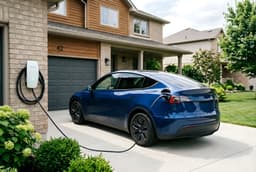
L2 chargers are already interconnected. They draw a modest load and they exist within residential neighborhoods utility companies understand and manage. No new substations. No high-voltage upgrades. No multi-year studies.
Community Charging Leads The EV Revolution
Community charging doesn't compete with NEVI or ZEVIP. It complements them by absorbing demand and relieving pressure of the public fast chargers.
RoadToEV's model turns existing private chargers into bookable, discoverable assets. This creates immediate and flexible capacity without waiting for construction seasons or grid upgrades.
From a systems perspective, this offers three advantages:
- Speed: New capacity comes online as soon as hosts list chargers
- Flexibility: Supply expands organically where demand already exists
- Resilience: Charging is spread across neighborhoods instead of concentrated in a few sites
Winter reliability improves by increasing options, not only by building more mega chargers.
Community Charging Is Not a Replacement
Community charging doesn't serve as an alternative to public infrastructure. It isn't. Both are necessary in the EV charging ecosystem.
Public fast charging is essential for long-distance travel, fleets, and highway corridors. But it is capital and time-intensive. It's slow to deploy and vulnerable to seasonal stress.
Community charging acts as a pressure-release valve.
When public stations are congested, offline or delayed by construction, nearby home chargers offer the same continuity. Drivers can plan charging near destinations instead of taking detours.
RoadToEV enables that planning layer. Booked sessions reduce uncertainty, smooth demand, and keep drivers out of queues.
In winter, that difference is huge.
Utilization Matters
Public chargers tend to have lower to medium utilization in warm and mild conditions and extreme congestion in winter. That volatility affects ROI calculations, grid planning and customer satisfaction.
From an economic standpoint, underutilization is as damaging as fewer chargers.
Community charging networks can stabilize utilization by shifting less-urgent charging away from fast chargers. It can also absorb local demand that doesn't require DC speeds. This creates a more predictable charging behavior.
Utilities and operators care about this. They can plan around this.
RoadToEV doesn't just add chargers, it also changes how and when charging happens.
What's the Incentive
Adding an incentive can help scale Infrastructure.
RoadToEV's host model succeeds because it turns their participation into personal benefit. Homeowners already have the asset. Listing their charger becomes one of the easiest monetization opportunities.
There's no capital investment required than what's already been put in. There's minimal operational overhead, and they earn income from otherwise idle infrastructure.
In winter, hosts provide great value while earning supplemental income.
Policy Blind Spots and Practical Fixes
Current policy frameworks still prioritize visible infrastructure: steel, concrete, megawatts. Community charging might be invisible to planners because it doesn't fit traditional procurement models.
That's a mistake. A BIG mistake.
As delays persist and winter stress increases, policymakers and utilities will need models that scale without breaking the grid or the calendar.
Community charging isn't an idea of the future. It's already deployed. RoadToEV simply organizes it.
It Scales Year-Round
If a charging model has to scale through winter, it needs to already be interconnected, and distribute load instead of concentrating it. It has to allow for advance planning and reward participation.
RoadToEV checks all four boxes.
NEVI will continue to build the backbone. ZEVIP will continue to fund growth. But between now and then, the system needs flexibility.
Winter makes that need obvious.
Ready to Bridge the Gap?
Download the RoadToEV app to see how P2P charging can stabilize and improve public charging networks. List your home charger, or book one nearby, and help build the network that powers the next EV revolution.
Available on all major app stores. Learn more at RoadToEV.com
For EV Auto Makers, Home L2 Charger Manufacturers and Public Charger Operators, and other businesses looking to partner with RoadToEV app contact marketing@roadtoev.com