





Why Fast Charging Gets More Expensive in Winter. The Economics of Charging.
Why does fast charging suddenly feel harder to make work in winter?
EV consumers feel it, as do public charger operators, utility companies and investors. Every winter.
Prices rise. Utilization becomes significantly higher. Customer frustration increases. And operators who looked solid in summer, find their margins under pressure by February.
This isn't a mystery. And it's not a failure of EV adoption. It's a sign that charging economics are seasonal, structural and far more complex than the idea that more chargers equal more revenue.
Winter doesn't just test EV batteries, but the entire charging business model.
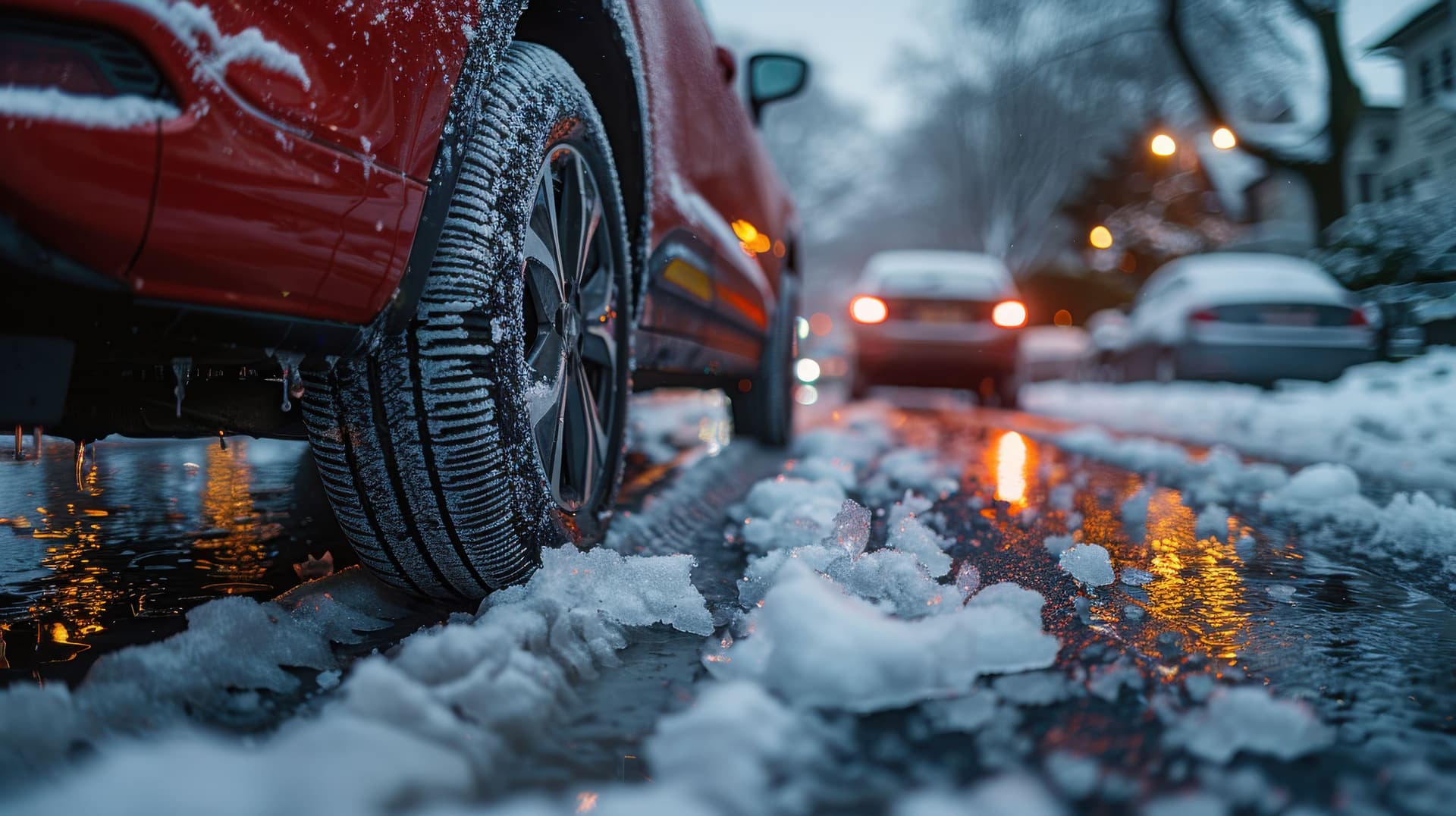
Winter Changes The Charging Game
Fast charging costs more in winter because the underlying inputs become more expensive and less predictable at the same time.
From the energy aspect, cold weather raises electricity demand across the grid. Heating loads rise and peak demand periods increase. In many regions, this triggers higher wholesale prices, tighter capacity margins and more frequent peak pricing events. For DC fast charging operators exposed to this, winter peaks can materially change monthly costs.
At the same time, cold temperatures reduce charging efficiency. Vehicles need to draw power for longer to achieve the same usable range. Which means, chargers stay occupied longer. But not necessarily at higher throughput. That's a key distinction.
While utilization time goes up, energy delivered per minute goes down.
From the perspective of revenue generation, that's less efficient. You incur higher energy and demand costs without a proportional increase in billable output.
Utilization Volatility: When Winter Makes Its Presence Felt
Most fast-charging business cases assume steady or steadily growing utilization. Winter has this unique ability to change this.
Demand becomes uneven, featuring high spikes at times. Weather events, holiday travel and range anxiety compress charging into narrower windows. Charging stations tend to experience queues at peak times and underutilization at others. Reliability issues, whether from equipment failures, network outages or grid constraints, can further amplify the volatility.
For operators, this becomes a big challenge. Pricing needs to rise to cover costs, but higher prices suppress discretionary charging and erode customer goodwill. Meanwhile, lower prices expose operators to demand charges they won't be able to recover.
This is why winter pricing often looks punitive to drivers. It's not greed. It's defensive economics.
Policy To The Rescue
Government programs in the US and Canada are addressing capital deployment to support greater EV adoption. However, they do not yet consider operational volatility.
NEVI funding in the US and ZEVIP in Canada have unlocked billions for charger installation, particularly along highway corridors and in underserved areas. That capital is essential, but it doesn't solve interconnection delays, demand charges, or winter load risk.
In some cases, it exacerbates it by concentrating assets in high-power configurations without corresponding flexibility.
Permitting and grid upgrades still take years. And most importantly, utility timelines are not aligned with demand fluctuation seen during winter. The result is a growing inventory of high-capex assets that perform well in theory and struggle in practice during winter peaks.
Fast Charging Alone Isn't The Solution
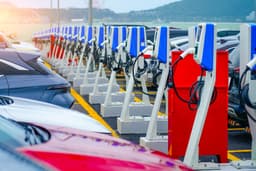
The industry has always looked at DC fast charging as the backbone of the EV transition.
Fast chargers are capital-intensive, grid-intensive and highly sensitive to demand charges. Their economics only work at high, consistent utilization levels. This is what winter disrupts.
This doesn't mean fast charging isn't necessary. It simply means it can't operate in isolation.
A charging ecosystem built entirely around high-power public infrastructure will always be structurally fragile. It will amplify seasonal cost swings, and push pricing shifts onto drivers. This will in turn create the very adoption issues the industry has been trying to eliminate.
Mixed Charging For Better Results
The more resilient charging systems emerging in North America share one common trait: diversification.
They blend fast charging with slower, distributed and context-based options.
Workplace charging. Destination charging. Residential and semi-private hosts. Community-level access points that absorb demand when public stations hit capacity.
From an economic standpoint, these assets are quite different. They operate at lower power levels and avoid demand charges. They also integrate into existing electrical capacity and their utilization is steadier because charging aligns with dwell time rather than urgency.
In winter, this can make all the difference.
When drivers can charge near where they already are, charging shifts from a peak-driven activity to a background one. That smooths demand curves and reduces stress on high-power assets. Plus, it lowers system-wide costs.
Community Charging Saves The Day
This is where models like RoadtoEV become strategically relevant. And, of course, convenient.
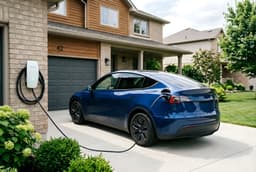
By unlocking residential and community chargers as bookable infrastructure, community networks add capacity without adding grid strain. These chargers already exist. They're already permitted. They already sit behind meters designed for residential loads.
Economically, they can be seen as a pressure valve.
During winter peaks, when fast chargers are congested and expensive to operate, distributed chargers absorb overflow demand. They reduce queueing, shorten peak windows and give drivers alternatives that don't rely on high-power delivery.
For operators and utilities, this means lower peak demand, improved load predictability and fewer emergency pricing decisions.
Drivers get the most benefit with lower effective charging costs, less winter headaches and the ability to charge closer to where they are.
Monetization Without Infrastructure Risk
When it comes to community charging, it's important to note there is no capital risk.
Residential charger hosts have already made their investment. The charger is sunk cost. Listing it on a platform like RoadtoEV turns idle capacity into incremental revenue without additional capex or grid upgrades.
This creates a micro-market for charging that behaves very differently from traditional infrastructure. Hosts earn enough to offset electricity and installation costs. Drivers gain access to convenient, predictable charging. And the system gains flexibility without adding strain.
From an ecosystem perspective, this is efficient capital allocation.
Winter Exposes The Bare Truth
Every winter reveals the same thing. Charging economics don't stand up to predicted models. This isn't because of lack of demand, rather because demand is uneven, seasonal and concentrated (in time and space).
Fast charging will always be more expensive in winter. It's simply battery chemistry, grid economics and the markets doing exactly what they're designed to do.
The real question is whether the industry continues to treat this as a pricing problem, or finally recognize it as a system problem.
Mixed charging models redistribute winter charging costs more intelligently.
The Long Highway of RoadtoEV
RoadtoEV isn't positioned as a replacement for public infrastructure. It's the missing middle.
It connects drivers to underutilized charging assets. It gives hosts a simple way to monetize existing equipment. And it adds flexibility and options to a system that desperately needs it. Especially during winter stress periods.
In a market where investors want predictable returns, utilities want manageable loads, policymakers want adoption, and drivers want affordability, RoadtoEV stands out.
Winter will always be hard on charging economics, but systems designed to flex rather than strain are the ones that scale. In the long run, the economics of charging won't be defined by who builds the biggest stations fastest, but by which system or network is the most resilient.
Ready to Beat Winter Economics?
Download the RoadtoEV app to see how P2P charging can stabilize and improve public charging networks. List your home charger, or book one nearby, and help build the network that powers the next EV revolution.
Available on all major app stores. Learn more at RoadtoEV.com
For EV Auto Makers, Home L2 Charger Manufacturers and Public Charger Operators, and other businesses looking to partner with RoadtoEV app contact marketing@RoadtoEV.com