





Winter Stress Test Time. Cold Weather Reveals North America's Charging Gaps
Every winter, North America runs the same experiment. And always ends up with the same uncomfortable results.
Cold temperatures arrive. EV range drops. Charging sessions take longer. Lines at public chargers grow longer. And the rest of the usual charades follow one after the other. Like reliability issues resurface. Wait times grow. Operators scramble. Policymakers issue statements.
Winter doesn't create the charging problems, it merely reveals them.
As EV adoption continues its northward drive across the U.S. and Canada, winter is the annual stress test that exposes the structural fragility of our charging systems. The question is not whether public charging networks are expanding fast enough on paper, but rather if the system can actually perform when conditions are challenging.
Cold Weather Changes Things
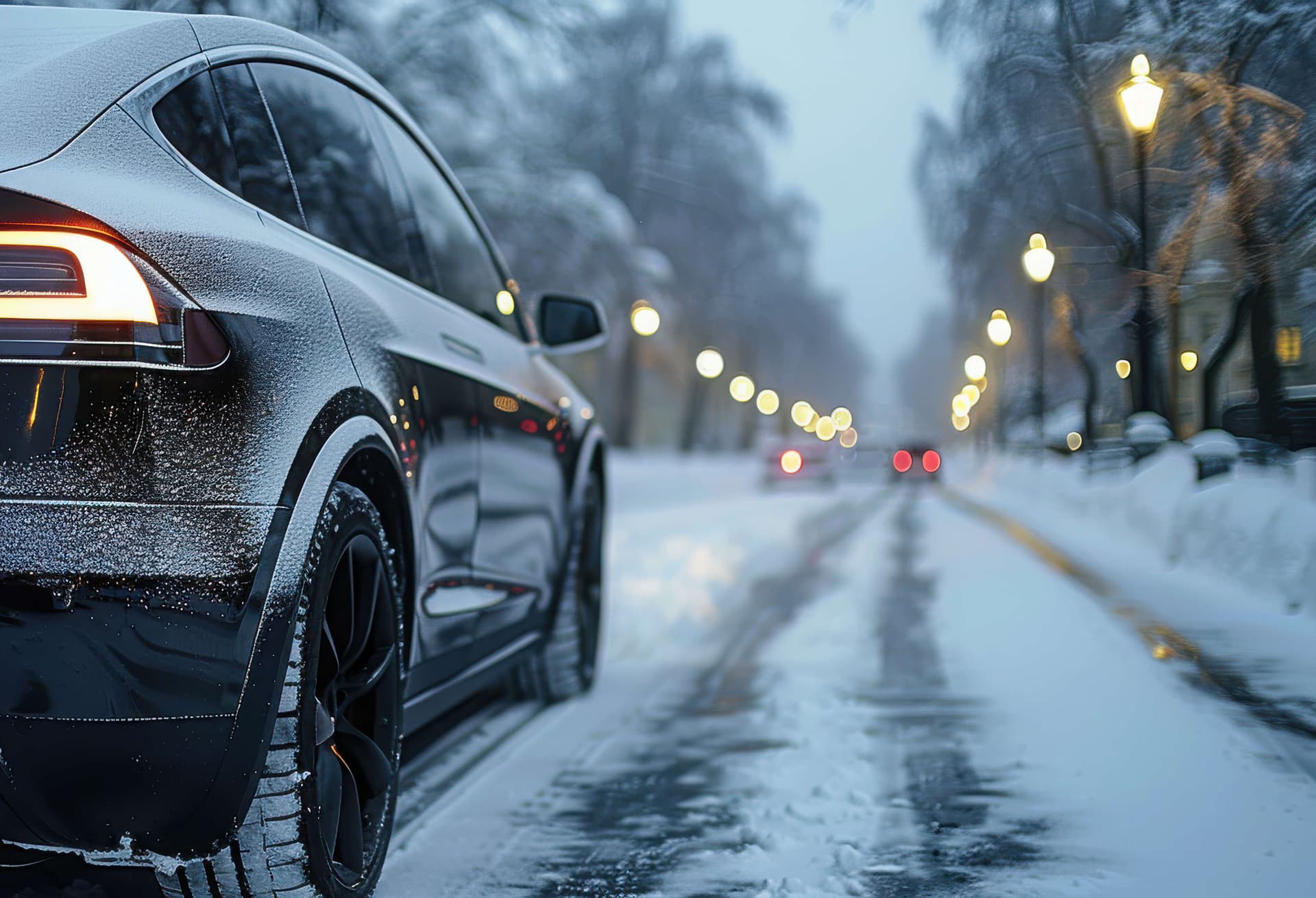
Cold weather alters EV behavior in predictable ways.
The biggest one is a range decrease. It can be anywhere from 10–40% depending on conditions. This also means drivers charge more frequently and at higher states of charge (SoC). Which translates to longer charging sessions due to slower battery chemistry. This leads to greater peak charging hours around commuting and travel windows.
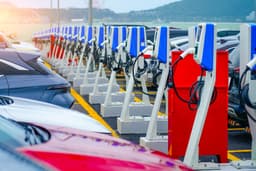
The end result is a sharp utilization spike at public fast-charging locations that test reliability limits at critical times. This can be a recipe for disaster.
In many regions, especially secondary cities, highway corridors, and suburban belts, chargers are already operating near their practical throughput limits during mild cold weather. When winter comes, it overloads them.
As January rolls around, the utilization data becomes predictable. Queues at DC fast chargers. Reduced charger availability due to cold-related faults, and ice and snow access issues. Drivers forced into longer detours or unplanned travel time.
Weather changes faster than Policy
Governments are aware of the ongoing issues. In the U.S., NEVI funding is flowing through state DOTs navigating procurement, interconnection and permitting bottlenecks, albeit slowly. In Canada, ZEVIP continues to expand support for public and private installations.
But winter highlights the ground reality. Even accelerated policy timelines don't have the ability to outpace seasonal demand spikes. Grid upgrades take years. Transformer replacements require time. Permitting cycles still need the same amount of time despite the weather. And public charging sites need money, permissions and availability.
Meanwhile, EV adoption doesn't pause in January.
This mismatch between infrastructure deployment speed and real-world seasonal demand creates a recurring reliability gap. And policy alone cannot close it.
We need a new perspective
The industry still leans heavily on chargers per capita, as a readiness metric. Winter shows why this metric isn't enough.
Reliability is contextual, it depends on a few factors. Like geographic distribution, not just total count. Charger density within neighborhoods, not just along highways.
Flexibility of access when primary sites are congested or offline. And the ability to shift demand away from stressed nodes
Public charging networks tend to concentrate demand. When something breaks or fills up, drivers have few nearby alternatives.
That's where a distributed charging model can change the equation.
Distributed Charging as a Winter Load Balancer
Distributed or peer-to-peer charging (P2P) doesn't replace public infrastructure. It complements it by absorbing overflow and smoothing utilization peaks.
This is exactly what RoadToEV does.
By enabling residential and semi-private chargers to be listed, discovered and booked, RoadToEV turns underutilized private assets into a flexible layer of charging. In winter, this flexibility matters.
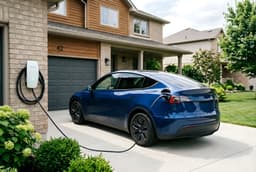
When a public station is full, offline or snowed in, nearby home chargers offer ease and convenience.
From a system perspective, RoadToEV has many advantages:
- Demand diffusion: Charging load spreads across neighborhoods instead of bottlenecking at single sites
- Predictability: Bookable sessions reduce uncertainty and queuing behavior
- Proximity: Drivers charge closer to destinations, reducing cold-weather range risk
- Resilience: More nodes mean fewer single points of failure
When winter exposes issues, RoadToEV adds flexibility.
First Resource, Not Just a Backup
One of the most overlooked winter benefits of distributed charging (RoadToEV) is behavioral. When drivers book a nearby charger aligned with their plans, charging stops being a chore, it integrates with the activity.
RoadToEV allows drivers to plan charging around activities, meetings, errands, and overnight stays, rather than planning life around charger availability. In winter, when unpredictability is high, that shift is meaningful.
Predictable charging behavior reduces panic charging, last-minute detours and inefficient fast-charge dependency.
It also reduces pressure on DC fast chargers that are most vulnerable to winter stress.
An Untapped Asset Sitting in Plain Sight
There is no shortage of L2 chargers across North America. They are installed in private driveways, garages and small commercial properties. Most sit idle for large portions of the day.
Winter doesn't change that. It simply makes their absence from the broader charging ecosystem more noticeable.
RoadToEV unlocks this dormant capacity without requiring new concrete, new grid upgrades, or new permitting battles. It turns existing infrastructure into a shared asset.
For policymakers and utility companies, this represents a low-cost, fast-to-deploy buffer against seasonal stress. For drivers, it means more options when it matters most.
The Side Hustle That Supports the System
There's also a human incentive layer that can't be ignored.
For charger owners, listing a charger on RoadToEV is one of the lowest-friction monetization opportunities in the EV ecosystem. The equipment is already installed.
The electricity is already flowing. The app handles discovery, booking and payment.
In winter, hosts aren't just earning. They're contributing to system reliability at the exact moment it's under pressure.
Distributed charging only works if participation scales. The easiest way to scale participation is to align personal benefit with collective need. And RoadToEV does both.
When Winter is Wintering
If winter reliably exposes charging gaps, then winter performance should be a core design requirement, not just a seasonal discussion topic.
Public infrastructure will continue to grow. Policy will continue to evolve. But resilience will come from diversity of access, not just scale. Distributed, bookable, community-based charging provides that diversity via RoadToEV.
RoadToEV doesn't replace public networks, it fills the spaces between them. And in winter, those spaces are where reliability is won or lost.
As EV adoption deepens and cold-weather utilization spikes become more pronounced, the charging ecosystem will need more than steel in the ground. It will need flexibility, proximity, and participation.
Winter has already told us that story. Are we listening?
Ready to Join the Solution?
Download the RoadToEV app to see how P2P charging can stabilize and improve public charging networks. List your home charger, or book one nearby, and help build the network that powers the next EV revolution.
Available on all major app stores. Learn more at RoadToEV.com
For EV Auto Makers, Home L2 Charger Manufacturers and Public Charger Operators, and other businesses looking to partner with RoadToEV app contact marketing@roadtoev.com